Here is your 100% unique, rewritten text, crafted through the lens of a culinary storyteller.
Navigating India's Culinary Atlas: A Guide to Your Inner Food Compass
To truly uncover the Indian restaurant that speaks to your soul, you must first learn to interpret the whispers of your own palate. Forget the notion of a single "Indian cuisine." You are embarking on a journey across a continent of distinct kitchens, each with its own sacred texts of spice and time-honored techniques. Allow me to be your guide, translating the language of your longing into a dot on this magnificent culinary map.
For a Taste of Velvet and Gold: The Royal Kitchens of the North
Is your soul craving not just sustenance, but splendor? A profound comfort that feels like being draped in cashmere? This yearning is a direct summons from the north, echoing from the opulent courts of the Mughal emperors and the fertile, wheat-golden fields of Punjab.
The Flavors: Mughlai & Punjabi
This is a culinary inheritance, a direct descendant of Persian and Central Asian courtly traditions. Mughlai food is the poetry of extravagance. Imagine meats slow-braised to impossible tenderness, gravies given a silken body with pastes of cashew and almond, and the air perfumed with the regal sighs of saffron, mace, and cardamom. While modern Butter Chicken owes its lineage here, its ancestors were infinitely more nuanced. Beside it stands Punjabi fare, its robust and generous cousin. Sharing a love for richness, it sings a more rustic, dairy-laden song, celebrating the land's bounty through glorious preparations of fresh paneer, hearty lentils, and wholesome breads.
Hunting for Royal Lineage:
- Your Search Terms: Go beyond the generic. Seek out "Mughlai dining," "Awadhi dastarkhwan," or "Royal North Indian cuisine."
- Reading the Menu: Look for whispers of royalty in the dish names: Shahi (royal), Korma (a specific, luxurious braise), and Dum Pukht (the magical art of slow-oven cooking under a sealed lid). If the menu boasts of intricate Biryanis, legendary melt-in-your-mouth Galouti Kebabs, or the soulful, slow-simmered stew called Nihari, you have discovered a sanctuary of Northern decadence.
For a Palate That Seeks Fire and Intricacy: The Spice Corridors of the South
When your taste buds have grown weary of the mundane, they cry out for a challenge. Not the brute force of simple heat, but an incendiary symphony of spices that reveals a new note with every mouthful. This craving is a powerful current pulling you southward, toward the sun-drenched, arid landscapes of Tamil Nadu and Andhra Pradesh.
The Flavors: Chettinad & Andhra
Here lies the fiery counterpoint to the creamy north. From the merchant Chettiar clan of Tamil Nadu comes Chettinad cuisine, renowned for its fiercely complex masalas. These are not pre-made powders but daily, fragrant rituals of grinding pungent black peppercorns, star anise, tangy tamarind, and the mysterious, woodsy lichen known as kalpasi (stone flower). Its neighbor, Andhra cuisine, proudly holds the title of India’s most fiery, built on the glorious potency of Guntur red chilies and the sharp, sour punctuation of gongura leaves. The heat here is never a gimmick; it is the very foundation of an astonishingly deep flavor architecture.
Following the Trail of Spice:
- Your Search Terms: Be specific. Hunt for "Chettinad kitchen," "Andhra mess," or "Authentic spicy South Indian."
- Reading the Menu: A dedicated "Chettinad" section is a brilliant sign. Let dishes like Chicken Chettinad, a dry-fried Mutton Varuval, or the electrifying Andhra Chili Chicken be your guides. If you see mentions of peppercorn-forward recipes or specific regional chilies, you are on a path to delicious annihilation.
For a Craving That's Crisp, Tangy, and Full of Light: The Temple Towns' Gift
You yearn for something that satisfies completely, yet leaves you feeling energized, not anchored. Your palate seeks delightful textures, a zesty tang, and a meal that is both profoundly savory and wonderfully light. Let your compass point toward the southern temple town traditions of Karnataka and Tamil Nadu.
The Flavors: Udupi & South Indian Tiffin
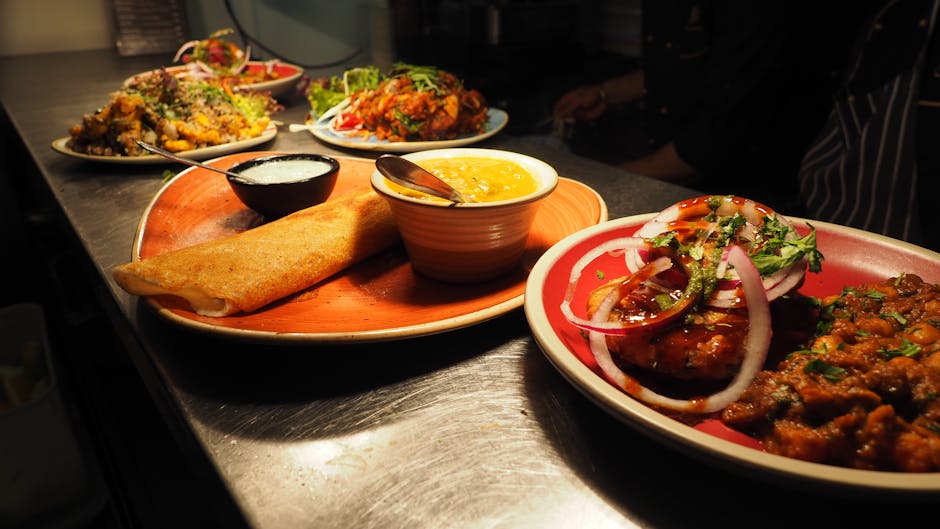
The genius of this cuisine lies in culinary alchemy: the patient, bubbling magic of fermentation. This is what bestows upon dosa and idli batter its signature airy texture and subtle, pleasing sourness. A perfect, golden dosa is the cuisine's thesis statement—a gossamer-thin, crisp crepe of rice and lentils. It is never served alone but with a trinity of accompaniments that create a perfect harmony: a deeply savory lentil and vegetable stew (sambar), a cooling, fresh coconut chutney, and often a fiery, dry "gunpowder" chutney (podi) for a final spark. This is a complete, nourishing world of flavor.
Identifying a True Tiffin House:
- Your Search Terms: Look for "Udupi restaurant," "South Indian Tiffin," or simply a "Dosa specialist."
- Reading the Menu: The hallmark of an authentic spot is a library of dosas (Masala, Rava, Paper, Mysore) alongside other tiffin staples like pillowy Idli, savory Medu Vada doughnuts, and fluffy Uttapam pancakes. The ultimate confirmation? A dining room humming with energy during breakfast and lunch, and the distinct aroma of true South Indian filter coffee in the air.
For a Soulful, Earthy Appetite: Echoes of the Coastline
An adventurous spirit has taken hold. You seek flavors that narrate tales of the sea, of monsoon-drenched soil, and of recipes passed down through generations. This deep, soulful hunger will lead you to the lush, palm-fringed coastlines of India.
The Flavors: Keralan, Goan & Bengali
The kitchens of these regions are a celebration of their geography. Running through the cuisines of Kerala and Goa is a sacred trinity of coconut (as milk, oil, and grated flesh), the day’s fresh catch, and a tart souring agent like kokum. The unmistakable perfume of curry leaves crackling in hot oil is their shared anthem. Journeying east, Bengali cuisine offers a completely unique dialect, defined by the pungent character of mustard oil and the iconic five-spice blend, panch phoron. This is the soul of unforgettable fish curries (macher jhol) and intricate vegetable preparations. These are foods born of place, tasting of rain, sea, and home.
Landmarks of an Authentic Coastal Kitchen:
- Your Search Terms: Pinpoint your destination with "Keralan cuisine," "Goan seafood," or "Traditional Bengali food."
- Reading the Menu: Venture beyond the familiar. For Kerala, seek out Avial (a mixed vegetable and coconut stew), Appam (lacy rice hoppers) with stew, or Meen Pollichathu (fish steamed in a banana leaf parcel). For Goa, hunt for the authentic, vinegar-sharpened Vindaloo (a legacy of Portuguese influence, not a generic curry) or a complex Xacuti. For a taste of Bengal, nothing is more iconic than Shorshe Ilish (hilsa fish in a potent mustard gravy) or the slow-cooked, intensely flavored mutton dish, Kosha Mangsho.
Here is your 100% unique rewrite, crafted in the persona of a culinary storyteller and Indian regional cuisine expert.
The Journey from Menu to Map: Why Specificity is Everything
So, why embark on this gastronomic expedition? Because to simply request ‘Indian food’ is to walk into a vast library and ask for ‘a book.’ It’s an impossibly broad stroke for a canvas of immense and intricate detail. To truly fathom the soul of this cuisine, we must abandon such monolithic terms. Consider this: declaring a desire for ‘European cuisine’ is a statement so vast it could mean a gossamer-thin French crêpe or a robust German sausage. Each is a world unto itself, answering entirely different questions the heart asks of the stomach.
When you seek out a kitchen dedicated to a specific regional heritage, your meal transcends mere sustenance. You become a champion for authenticity, a custodian of culinary heritage. Your choice is a powerful statement against the relentless tide of commercialization that threatens to steamroll a subcontinent’s diverse foodways into a familiar, marketable form. You are celebrating the chef who dared to feature the fragrant complexity of a Parsi Dhansak or the earthy soul of a Bihari Litti Chokha, giving them a place of honor next to the inescapable Butter Chicken.
Let your palate's specific longing be your North Star. Instead of navigating the sea of sameness found on so many menus, you can chart a direct course toward a meal that sings to you. This, my friends, is how a mundane digital query for a nearby takeaway blossoms into an act of genuine culinary excavation. It is here you begin to understand that the true alchemy lies not in a vague concept of 'curry,' but in the distinct dialect of its ingredients. Is it the sharp, fruity tang of tamarind, the dusky sweetness of kokum, or the tart whisper of dried mango that sours the gravy? Is the foundation built upon the nutty richness of ghee, the pungent fire of mustard oil, or the coastal creaminess of coconut oil? Each choice tells a different story.
This pursuit is ultimately about forging a genuine connection and finding food that speaks of its origins. It is about tasting the decadent legacy of Mughal courts in a silken korma, or feeling the salt-laced air of the Malabar coast in a tamarind-laced fish preparation. When you finally locate that perfect establishment, you haven’t just found a place to eat. You have discovered a culinary embassy, a delicious gateway to another world.